


If the Fed raises rates once, more hikes likely to follow
A shift in the Fed’s tone, persistent inflation and labor market uncertainty are raising new questions about the path of interest rates
Lectura de 5 minutos
PUNTOS CLAVE
- The Federal Reserve has become more cautious about lowering rates as inflation remains stubborn and economic data continues to show resilience.
- Changes to Fed communication and reduced forward guidance are increasing market volatility and placing greater emphasis on incoming economic data..
- Investors are closely watching inflation and employment trends, as any future rate increase could signal the start of a broader tightening cycle.
Despite being led by a new chairman appointed by a president who has repeatedly advocated for lower interest rates, the Federal Open Market Committee's (FOMC) bias has recently shifted toward higher rates. Sensitivity to appearing influenced by politics may be responsible for some of this shift, but economic data has shown resilience in growth and a stickiness to inflation that is also part of this change from within the Fed.
Meanwhile, Fed Chair Kevin Warsh is reviewing a few ways to, hopefully, improve how the Fed oversees monetary policy going forward. These topics range from the way the Fed measures inflation, to the veracity of their data and sources, the size and composition of their balance sheet, the impact of artificial intelligence (AI) on the labor market and economy and how the Fed communicates with market participants. The overall idea of these reviews is to increase the credibility of the Fed and its oversight of monetary policy.
In the interim, some of the changes, like their communication and a reduction in forward guidance, are increasing volatility in the bond market as participants consequently must rely more on incoming economic data rather than what the Fed states they are going to do. While a bit uncomfortable now, the lack of accuracy in past Fed forecasts and guidance would indicate this shift is warranted.
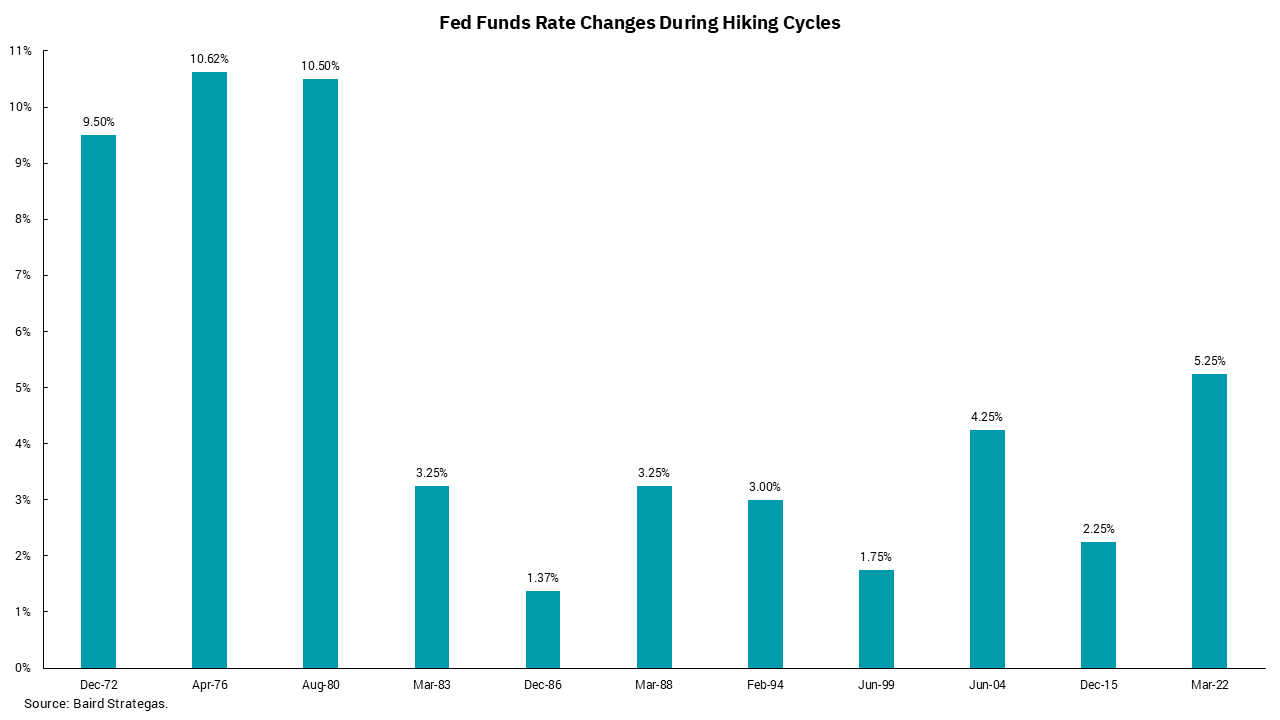
Our chart this week provides some insight into what it might mean if the Fed does raise rates over the next few months. While there have been limited instances where the Fed has raised rates once and then subsequently lowered rates, the historical record shows a first increase is normally the beginning of a cycle of increases. This is why the markets will be watching the data on employment and inflation so closely over the next few months.
In both cases, the data influencing these two Fed mandates is being impacted by forces outside the Fed's control. The monthly labor report for July reflects this. While job growth was negative and revisions for the prior two months were lower, the headline unemployment rate fell from 4.2% to 4.1%. The labor force is being buffeted by our aging demographic and shifts in immigration policies which are impacting the size of our labor force. The magnitude of the influence of these factors as we move forward is unknown. Similarly, the Fed's inflation mandate is subject to the ongoing nature of the conflict in Iran.
Our sense is it will be difficult to get inflation back to the Fed's 2% target in the short run, but that doesn't necessarily mean that the Fed needs to raise rates. Time and data will tell the tale, but unless the Fed is willing to say a series of rate increases is necessary, stability might be the best case. In the meantime, getting accustomed to relying less on Fed direction is a good thing for investors and the capital allocation process within markets.
Obtenga By the Numbers en su bandeja de entrada.
Suscríbase (Se abre en una pestaña nueva)